


November pushed Harmony closer to its goal of simple, dependable on-chain strategies. Hedging models advanced from parameter tuning to full spec-driven systems, supported by asynchronous execution, virtual LP generation, long-range backtests, and cleaner PnL inputs. Core protocol work kept pace as trusted peer logic was rebuilt, Stream Sync stabilized across Devnet and Testnet, and the upcoming 2025.1.2 release entered final testing. Together, these upgrades strengthened both strategy reliability and the network foundation beneath them.
Across the ecosystem, November saw strong participation from validators, creators, and community projects. Fortune.ONE and TecViva highlighted ongoing staking commitments, while EasyNode and Crypto_Land_DAO kept users engaged through a mix of airdrops, giveaways, and clear strategy updates. Kilopi, FlappyH1, and Mintbes added energy with new gameplay, grassroots rewards, and artistic contributions that broadened the ecosystem’s reach. These efforts kept the Harmonaut community connected and building as Harmony continued shaping simple on-chain strategies.
Week of November 3rd
The team concentrated on improving hedging models, validating backtests, and strengthening node reliability across environments. Aaron refined BTC liquidity pool hedging parameters, corrected quote-asset indexing issues, and continued debugging the LP Hedger BTC deployment. Artem advanced the hedging model from static to dynamic exposure tracking and validated results against September data. Gheis improved trusted node logic on Devnet, added automatic peer fallback behavior, and completed the PUSH0 opcode upgrade to reduce bytecode size and gas usage.
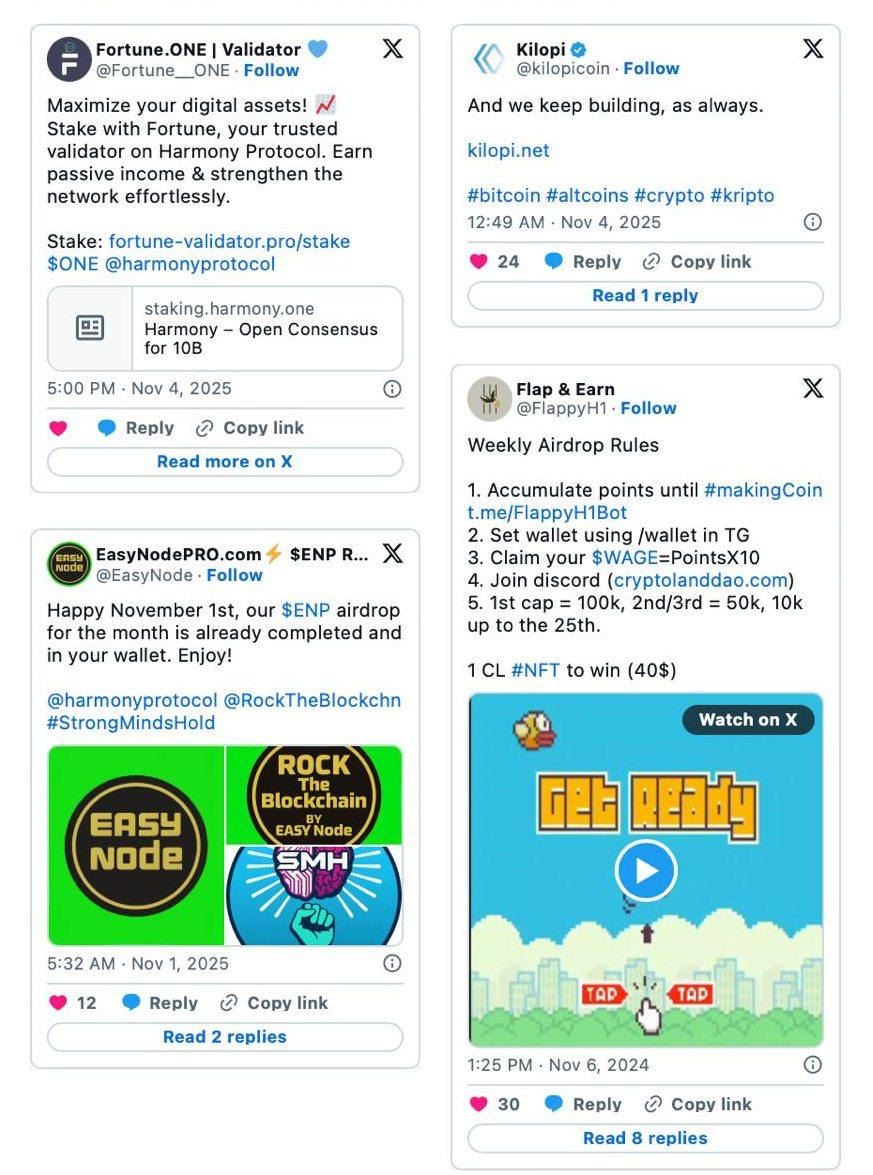
On the community side, validators and builders kept the ecosystem active as November opened. Fortune.ONE spotlighted staking as an accessible way to support network security. Kilopi reaffirmed its steady pace of building across the chain. EasyNode kicked off the month with an ENP airdrop that kept long-time participants engaged and welcomed new users. Flap & Earn added momentum on the grassroots side with clear steps to get started flapping and earning.
Top 3 Team Progress:
Gheis: Enhanced trusted node selection with automatic DNS fallback and deployed the upgrade to Devnet for improved peer stability.
Artem: Completed the dynamic BTC hedge model that tracks exposure over fixed intervals and validated positive early results for September positions.
Konstantin: Replaced Duktape with the go-ja engine across core services to simplify execution logic and begin a new release cycle.
Week of November 10th
Momentum continued this week as the team focused on refining hedging engines, improving returns analysis tools, and strengthening trusted peer logic for upcoming network upgrades. Aaron converted Deribit trading to asynchronous execution, fixed hedge closing bugs, and added safeguards against bid ask loss while backfilling missing October data. Artem expanded the hedging model with October data, integrated funding rate costs, and introduced a trend following algorithm that produced positive results against September positions. Gheis completed a major refactor of trusted peer detection to replace outdated logic with dynamic event based tracking, which improves Stream Sync reliability and reduces inconsistent behaviors across the system.
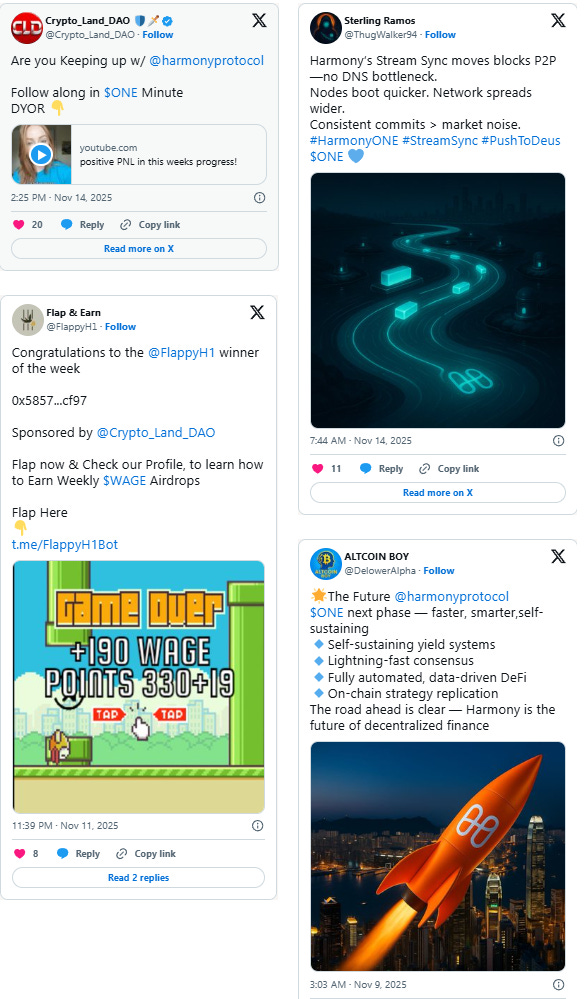
Crypto_Land_DAO amplified the team’s weekly summaries and positive PnL results. Builders celebrated FlappyH1’s latest winner and the growing reach of their airdrops. Sterling Ramos emphasized the benefits of peer to peer Stream Sync, noting faster node boot times and wider network spread. Across the ecosystem, creators and analysts pointed to self sustaining yield systems and on chain strategy replication as clear signals of Harmony’s next phase.
Top 3 Team Progress:
Gheis: Refactored trusted peer detection into a dynamic system that updates maps on every event and removes inconsistent logic paths for faster and more accurate stream tracking.
Aaron: Converted Deribit and Hyperliquid engines to asynchronous execution and added protections against bid ask loss and microhedging while repairing missing October data.
Artem: Added October data, funding rate costs, and a trend following algorithm to the hedging model, producing positive PnL when tested against September positions.
Week of November 17th
The team made steady advances this week in hedging automation, wallet analytics, and network stability across Devnet and Testnet. Aaron finalized the migration of the liquidity pool hedger to asynchronous execution and validated data integrity, hedge logs, and profit calculations. Artem introduced virtual LP generation for long-range backtesting, optimized parameters for more accurate PnL, and added new configuration options to the hedging model. Gheis merged several major PRs that resolved trusted peer inconsistencies, fixed race conditions in stream removal logic, and promoted Stream Sync to the default synchronization method after proving its stability.
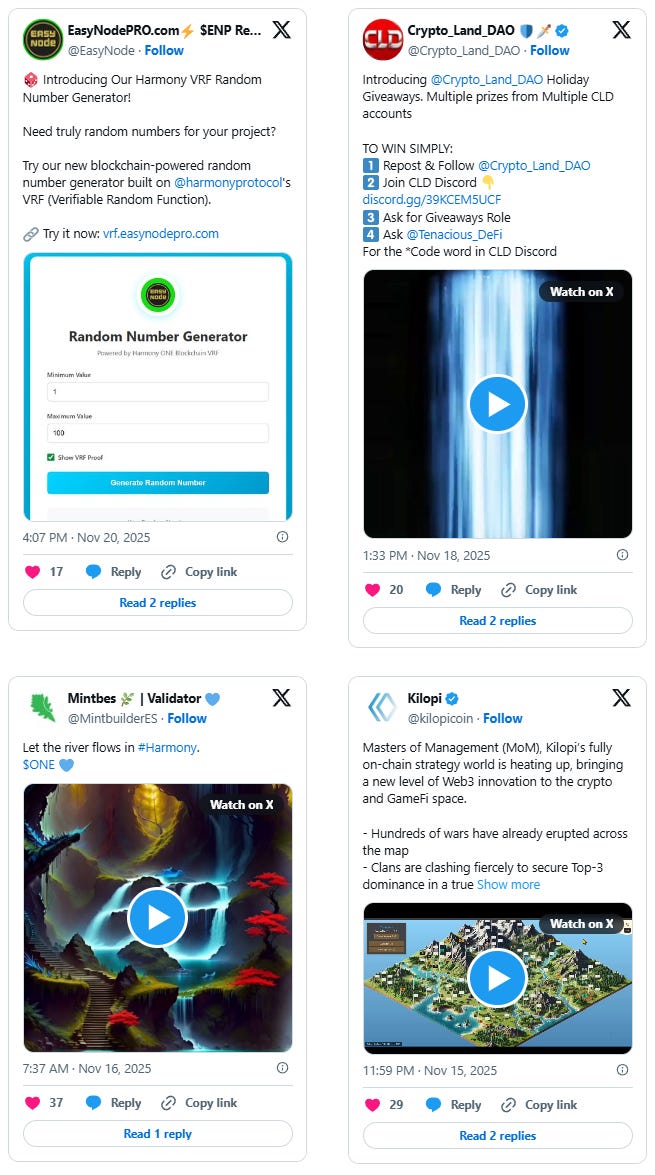
Momentum continued this week with new tools, events, and on-chain creativity. EasyNode introduced a VRF-powered random number generator, showcasing another practical use of Harmony’s core infrastructure. Crypto_Land_DAO energized the ecosystem with its holiday giveaways. Mintbes highlighted support by utilizing their visual and artistic side. Kilopi continued expanding its on-chain strategy world, bringing competitive gameplay and Web3 immersion to a growing audience.
Top 3 Team Progress:
Gheis: Merged PRs that resolved trusted peer inconsistencies, fixed race conditions in stream removal tests, and elevated Stream Sync to the default sync method across Devnet and Testnet.
Aaron: Finalized the migration of the LP hedger to asynchronous execution and validated hedge logs, PnL, and data integrity.
Artem: Implemented virtual LP generation for long-range backtesting and introduced new parameters that improve hedging model precision.
Week of November 24th
Wrapped up the month by refining hedging tools, completing major protocol improvements, and preparing the next large network release. Artem finalized a fully working hedging script, added liquidity and delta parameters, and completed multi parameter backtests that the team validated together. Gheis delivered a new error classification system for stream operations, refactored EIP-2935 to match upstream Ethereum changes, and moved the 2025.1.2 release into final testing. Additional progress included Rikako correcting APR and HODL calculation issues, Yuriy advancing multi rebalance hedging tests, and Ulad completing OAuth upgrades, monitoring refactors, and new Grafana Git sync features.
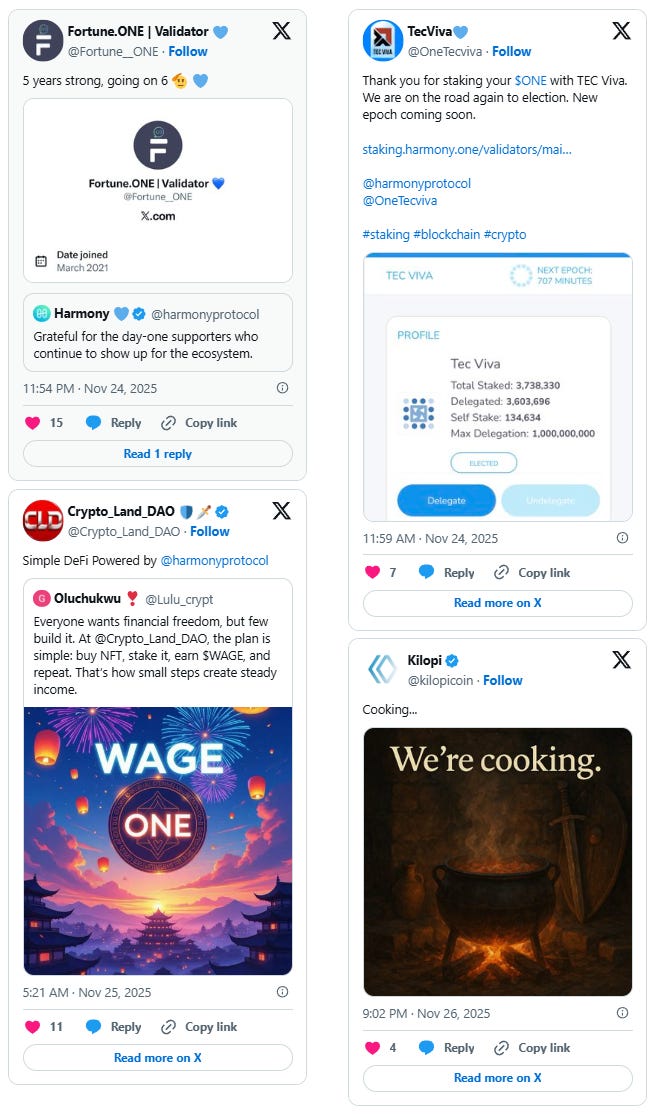
As November closed, the community continued to show steady support and activity across the network. Fortune.ONE and TecViva highlighted ongoing staking commitments, reinforcing the importance of long-term validators in strengthening Harmony’s foundation. Crypto_Land_DAO kept DeFi participation lively and highlighted how smooth it can be when backed by Harmony’s low fees and fast finality. Kilopi ended the month with a teaser of what’s next, signaling more gameplay and on-chain innovation on the horizon.
Top 3 Team Progress:
Gheis: Introduced a new error classification system that distinguishes recoverable and critical stream errors, significantly improving network resilience and stability on Devnet.
Artem: Completed a fully working hedging script with expanded liquidity and delta parameters and delivered comprehensive backtests for team validation.
Ulad: Finished the GitHub OAuth integration and monitoring refactor and shipped key updates for upcoming releases, including stream sync improvements and Ethereum 1.10 upgrades.
Conclusion
November pushed Harmony’s strategy engine closer to a clean, predictable system for on-chain hedging and liquidity management. Hedging models matured with long-range backtests, virtual LP generation, and refined parameters that cut noise and clarify true PnL. Network improvements kept pace, with trusted peer fixes, new error handling, and the next major release entering final polish.
Wallet analytics and copy-trading research also advanced, exposing where variance comes from and how to eliminate it with better timing, fees, and data inputs. Together, these upgrades reinforce Harmony’s goal: simple, effective DeFi strategies delivering sustainable yields network wide.💙