

January 2026: Updated Virtual Machine🔗 & Integrated Backtesting Database🛠
In January, the team focused on improving the accuracy of our hedging and backtesting infrastructure. We integrated the hedge manager with the Hyperliquid testnet and rebuilt our backtesting pipelines to use direct RPC data, reducing discrepancies between theoretical models and live performance. On the protocol side, we resolved cross-shard receipt info and updated the Harmony VM to maintain alignment with recent Ethereum EIPs.
This month showcased the strength and initiative of the Harmony community. From deep-dive discussions on the 2026 roadmap to the release of staking and onboarding guides and validator-led initiatives. Our community has been instrumental in driving the network forward. With new outreach, active DAO programs, and the deployment of new validator dashboards, the ecosystem continues to grow more accessible through collective effort.

Week of January 5th
The team focused on syncing live hedging results with theoretical models and hardening infrastructure for the next release. By relaunching the hedge manager in controlled sessions, we confirmed that positions replicate correctly and traced P&L gaps back to pricing and execution. We also rebuilt the backtesting system to pull data directly from RPC endpoints; replacing legacy databases to ensure more accurate historical analysis. On the protocol side, we improved EVM compatibility with new opcodes and finalized our pre-release monitoring tools.
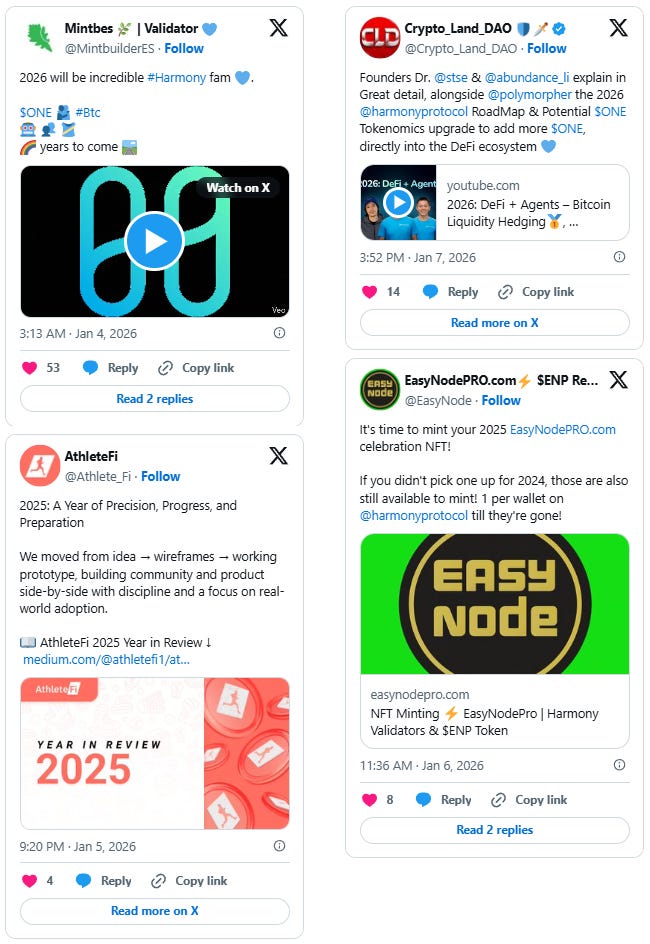
Community: Mintbes and Crypto_Land_DAO discussed the 2026 roadmap, specifically focusing on DeFi agents and liquidity hedging. Athlete_Fi published their year-end review focused on execution and real-world adoption. EasyNode launched their 2025 NFT.
Top 3 Team Progress
Gheis: Merged and deployed multiple VM upgrades aligning Harmony with recent Ethereum EIPs, including transient storage opcode fixes, memory copy support, and initcode size limits to improve compatibility and contract safety.
Yuriy: Relaunched and validated the hedge manager across controlled live sessions, confirming correct position replication and identifying pricing and execution paths as the primary sources of observed PnL discrepancies.
Rika: Rebuilt backtesting pipelines to fetch data directly from RPC instead of legacy databases, reran corrected hedging and regular strategies, and aligned results across implementations to resolve PnL calculation inconsistencies.
Week of January 12th
This week was about making our simulations more realistic. We updated the hedging system to include execution delays, funding costs, and price latency to better match live market behavior. Backtesting for options and LP strategies was also upgraded with denser pricing data and virtualized positions. Meanwhile, the protocol team resolved several validator reports and investigated a shard transfer bug affecting receipts on dev branches.
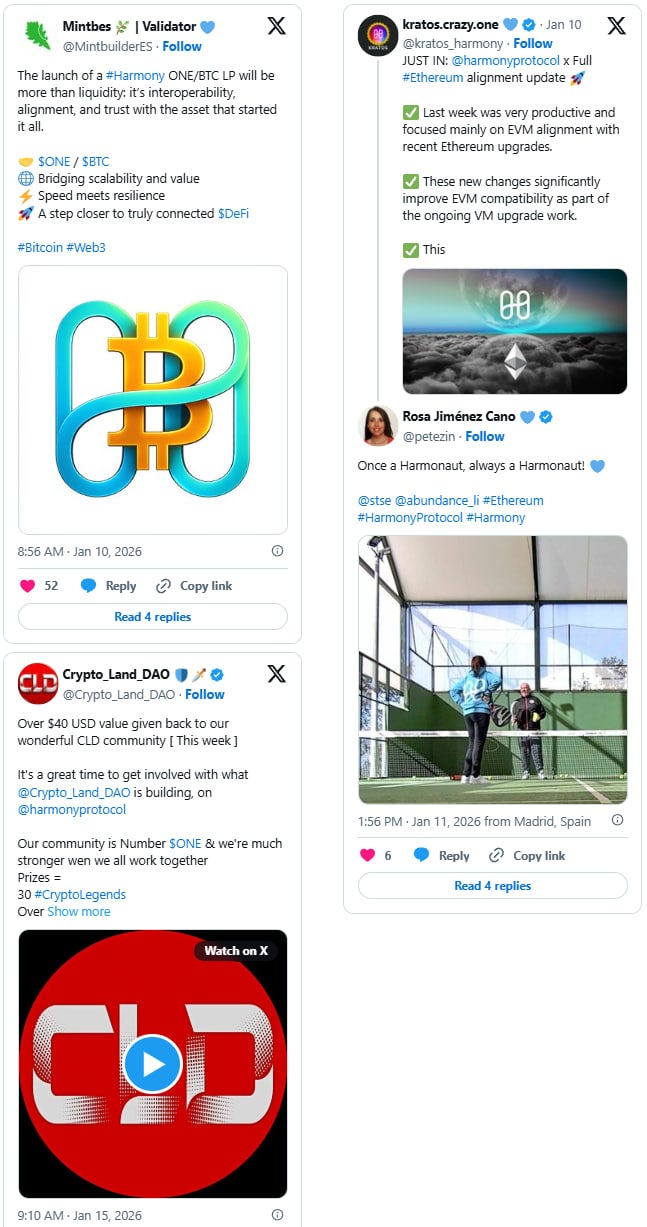
Community: Discussions shifted toward Ethereum alignment and the benefits of recent EVM upgrades. Validators remained active in network maintenance and shared updates on DAO-driven value for users.
Top 3 Team Progress
Yuriy: Enhanced hedge strategy realism by adding execution delays, funding cost modeling, and price latency simulation, and validated results against live Hyperliquid trading sessions.
Gheis: Implemented EIP-6780 SELFDESTRUCT semantics, standardized chain configuration fields across networks, and fixed a validator-reported debug tracing bug to improve VM correctness and maintainability.
Aaron: Enabled virtualized LP positions in backtests, expanded option pricing data collection, and improved backtesting adapters for the LP Hedger to support more accurate strategy evaluation.
Week of January 19th
We focused on scaling infrastructure and fixing persistent protocol bugs. After identifying loss patterns caused by frequent "micro-triggers," the team began testing AI-assisted parameter tuning and historical replays. We also refined our LP copy trading analysis by improving wallet filtering and reward calculations. Notably, the cross-shard receipt generation bug was fixed, and we added new opcodes to the VM while auditing tracer accuracy.
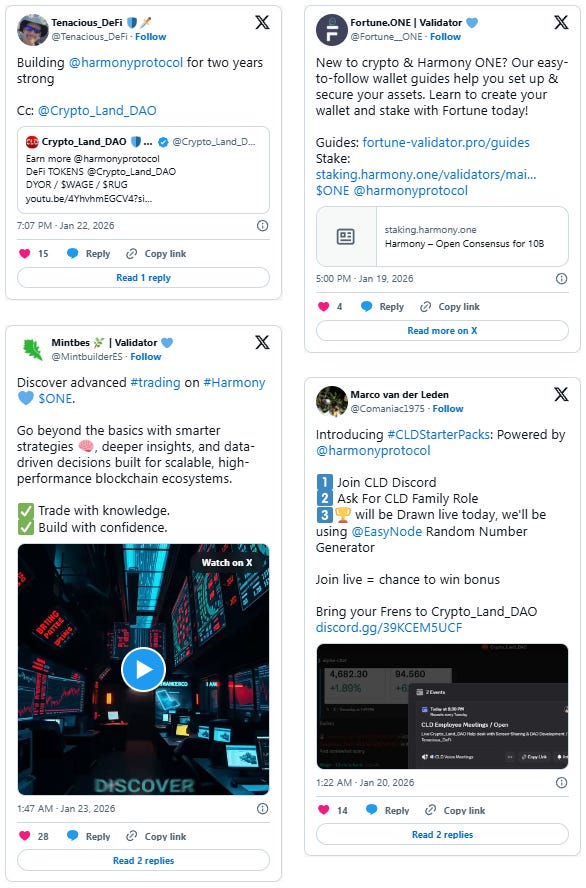
Community: Long-term contributors published new onboarding and staking guides to simplify the user experience. Validators highlighted new data-driven trading strategies, while DAO groups hosted live events to bring in new participants.
Top 3 Team Progress
Yuriy: Integrated lp_hedger with the backtest server, enabled parallel strategy execution, exported recent historical data, and identified structural causes of negative PnL in range-bound market conditions.
Rika: Advanced LP copy trading analysis by improving wallet filtering, refining APR and reward calculations, and validating copy performance against target wallets with controlled execution delays.
Konstantin: Fixed cross-shard transaction receipt generation, processed multiple weeks of mainnet blocks, and collected execution traces to diagnose remaining block-level discrepancies.
Week of January 26th
The team focused on end-to-end testing for hedging and backtesting. We integrated the hedge manager with the Hyperliquid testnet and moved it to staging, allowing us to test multiple strategies under real market conditions. We also refined LP backtesting by speeding up data ingestion and fixing calculations for impermanent loss, rewards, and token burns. To improve reliability, the protocol team updated node security, streamlined log metrics, and verified the accuracy of block time reporting.
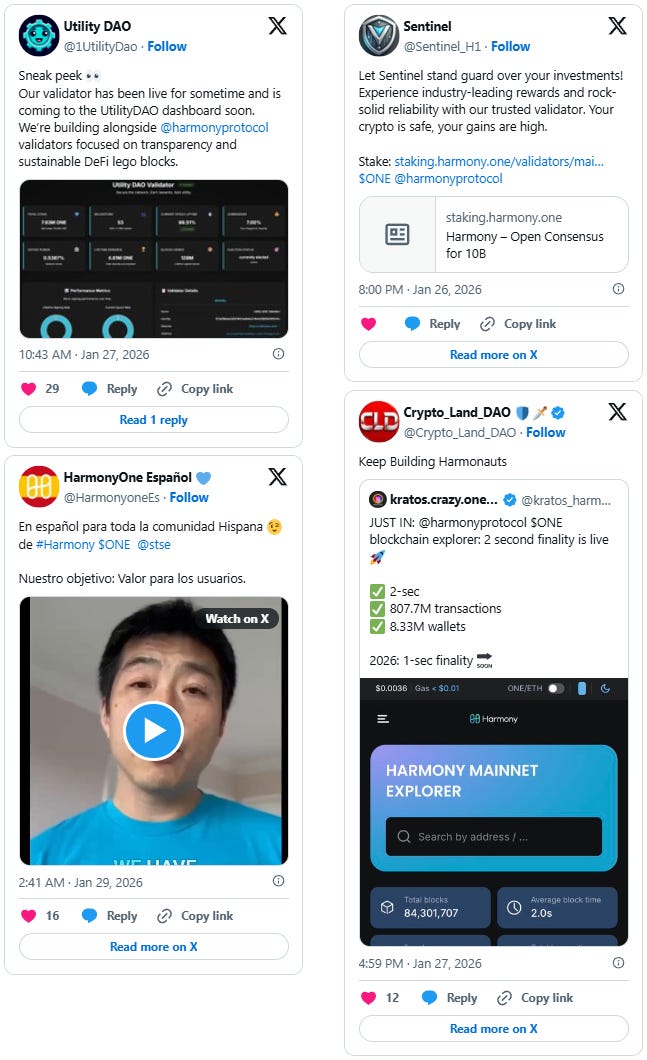
Community: Validators continued to improve network tooling, sharing updates on new dashboards and staking services. @HarmonyoneEs translated content to further the reach of 2026 roadmap updates. The community celebrated recent explorer data that confirmed protocol improvements have maintained consistent two-second block times.
Top 3 Team Progress
Yuriy: Integrated the hedge manager with the Hyperliquid testnet, deployed strategies to staging, and evaluated data synchronization approaches to improve backtest and event ingestion performance.
Rika: Corrected impermanent loss and reward calculations in LP copy bot backtests, reran comparisons across wallets, and improved logging to better explain performance differences.
Ulad: Added monitoring and alerts for the log ingestion pipeline, applied mandatory node and security upgrades, and validated explorer fixes for accurate two-second block time reporting.
Conclusion
This month’s work transitioned theoretical models into staging and testnet environments. By accounting for execution delays and funding costs, we have improved the reliability of our hedging and backtesting data. These technical updates, alongside stable protocol performance, provide a foundation for further strategy development and ecosystem growth in February.💙